






 Дом
Дом Продукты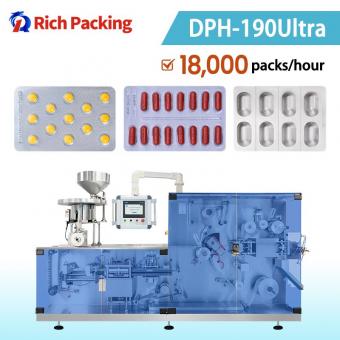
29+ years in pharmaceutical machinery, covering capsule filling, tablet pressing, blister packaging, tablet and capsule counting, cartoning, GMP production, and overseas machine service.

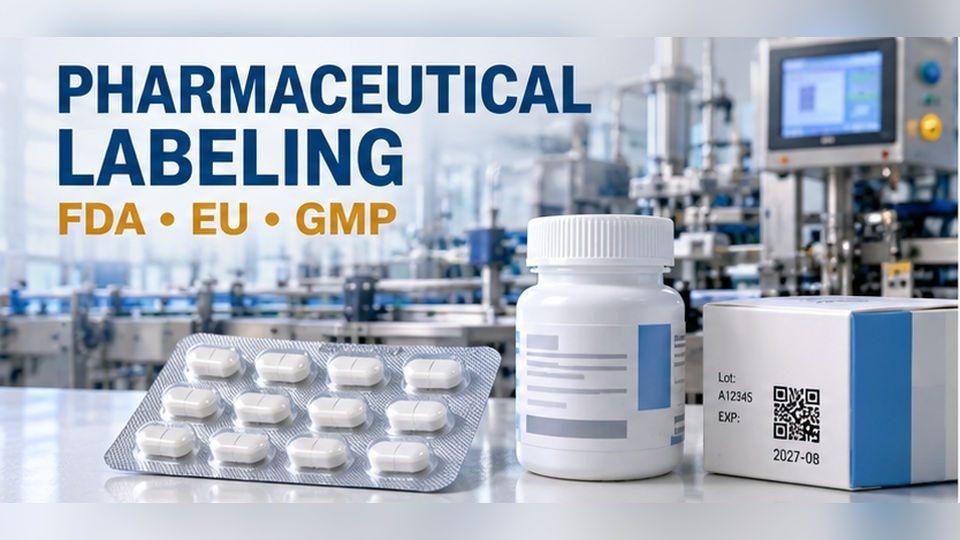
A carton may say 10 mg while the blister inside contains 20 mg tablets, or a bottle may carry the previous batch's expiry date. Pharmaceutical labeling requirements address both the information patients need and the controls that connect it to the correct medicine.
US and EU labeling rules differ, but packaging teams face the same challenge: matching approved artwork, components, and variable data. The following explains the FDA and EU rules and how GMP controls and machines apply them.
Start with the finished pack in your hand. It may include an immediate container—the bottle or blister touching the medicine—an outer carton, and a leaflet. Their required information depends on the approved product and market; there is no global template.
Most pharmaceutical labels help a user answer three questions: What medicine is this? How should it be used safely? Can this pack be traced? The table explains common fields, not a universal list of legal requirements.
|
Information |
What it tells the reader or manufacturer |
Where it may appear |
|---|---|---|
|
Product name and strength |
Distinguishes one medicine or dose from another |
Bottle, blister, carton |
|
Active substance, dosage form and contents |
Identifies the formulation and pack presentation |
Usually prominent on outer packaging; as applicable elsewhere |
|
Directions, precautions and storage |
Helps people use and store the medicine correctly |
Package labeling and/or leaflet, according to the product |
|
Batch or lot number |
Connects packs to manufacturing and quality records |
Appropriate packaging levels |
|
Expiry date |
Identifies the approved dating limit |
Appropriate packaging levels |
|
Company or authorization details |
Identifies the responsible entity |
As required by the market |
|
Barcode or unique identifier |
Enables identification or traceability where required |
Location and format depend on the rule |
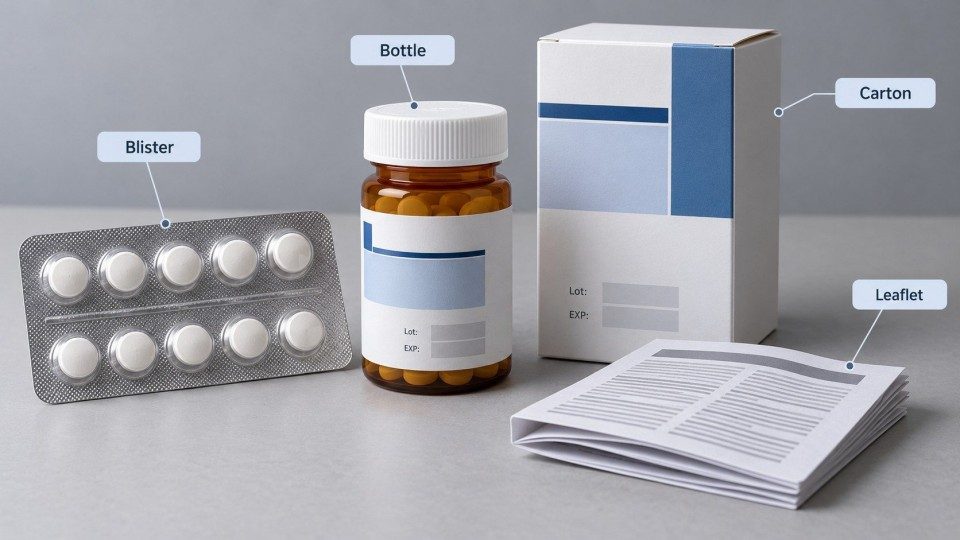
A batch number and a serial number are not the same. All cartons from one production batch can share its lot number, while each carton may receive a different serial number under an applicable serialization system. A readable barcode can still be printed on the wrong product.
For code definitions, see our medicine label codes guide. Here we focus on regulatory requirements and packaging control.
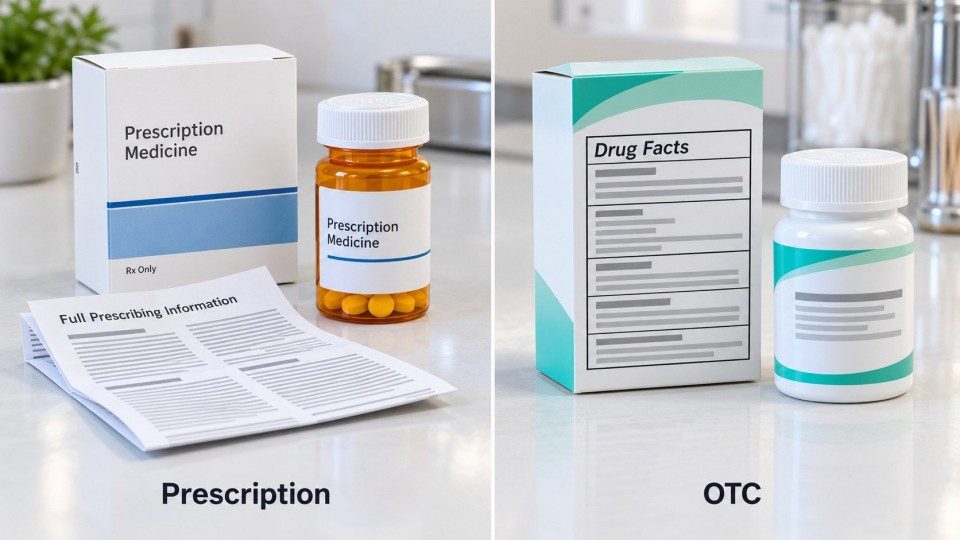
For medicines sold in the United States, the first distinction is prescription versus over-the-counter (OTC). They use different labeling formats. 21 CFR Part 201 governs drug labeling; Part 211 addresses controls against packaging mix-ups. Always start with the product's approved or otherwise applicable labeling.
Prescription medicines need information on uses, dosing, contraindications, warnings, and adverse reactions. For products within their scope, 21 CFR 201.56 and 201.57 set out the content and format of this prescribing information, including the Highlights and Full Prescribing Information sections.
The entire prescribing document does not belong on a bottle label. The physical package has its own requirements; teams control container labels, cartons, and prescribing-information materials separately.
Imagine a manufacturer supplying the same tablet in 10 mg and 20 mg strengths. Cartons can look similar, and both blister sizes may fit one cartoner. Before running the 10 mg order, the team must confirm that the printed blister foil, carton, and insert all belong to the 10 mg presentation. A perfectly printed 10 mg carton containing a 20 mg blister is still the wrong package. Printer checks alone will not catch this.
Most US OTC medicines use a standardized Drug Facts panel. 21 CFR 201.66 establishes its standardized sections, including Active ingredient, Purpose, Uses, Warnings, Directions, Other information, and Inactive ingredients, subject to the applicable rules and exceptions.
Consider two cold-medicine cartons with nearly identical branding but different active ingredients or directions. Old artwork might carry the right batch code but the wrong warning. The packaging check must therefore identify the approved Drug Facts version, not simply confirm that some label was applied. Do not apply the OTC template to prescription drugs.
Barcode rules are separate. 21 CFR 201.25 covers specified prescription drugs, biological products, and certain hospital-use OTC medicines, with exclusions and exemptions. For covered products, the rule generally calls for a linear barcode containing the appropriate National Drug Code (NDC).
The Drug Supply Chain Security Act (DSCSA) deals with serialized product identification and tracing for covered prescription-drug packages and homogeneous cases. It differs from Part 201 barcoding. Specify each coder's required data, format, and verification point; a scanner can otherwise pass the wrong code.
EU rules distinguish outer packaging, immediate packaging, and the leaflet. Directive 2001/83/EC, particularly Articles 54–63, describes the key particulars, presentation, and language rules. EMA QRD templates help lay out approved text but do not replace legislation.
Under Article 54, the outer package—or immediate packaging where no outer package exists—must display specified particulars. These include product identity, relevant composition and administration information, contents, applicable warnings, expiry, batch number, and authorization details. Artwork must match the authorized product and market.
Article 55 then deals with immediate packaging. Cartons offer more print space than blister foil, which also carries sealing and cutting features. For qualifying blisters enclosed in an outer carton, Article 55(2) permits a shorter set of particulars, including the medicine name, marketing authorization holder, expiry date, and batch number. Do not assume the same reduced set is sufficient for a blister sold without the outer carton.
Maintain distinct, linked carton and foil artworks. For a new market, check whether the foil, leaflet, and language must change too.
The leaflet is a regulated component. Articles 58–59 address whether a package leaflet is needed and what it must contain, subject to applicable conditions; Articles 56 and 56a address presentation and Braille, and Article 63 addresses market language requirements and exceptions.
On a cartoning line serving several EU markets, two leaflets may be folded to exactly the same size. A presence sensor confirms insertion, not necessarily whether it is German or French. Identity checks and controlled material issuance address this risk. EMA's current human QRD annotated template, version 10.4, is a useful reference when preparing this artwork.
Not every medicine sold in the EU needs serialization. Article 54a and Commission Delegated Regulation (EU) 2016/161 establish safety-feature requirements for medicines within their scope, with defined inclusions, exclusions, and exceptions. Covered packs generally require a unique identifier and an anti-tampering device.
The unique identifier includes a product code, serial number, batch number, expiry date, and an additional national number where applicable. It uses a 2D Data Matrix, generally on the outer carton when present.
The line must receive serial data, print it on the correct carton, verify content and quality, and manage rejected identifiers. Article 6 of Regulation 2016/161 addresses print quality; it should not be treated as a blanket specification for every scanner or medicine.
The same information creates different risks on blister foil, bottle labels, and cartons. The line must control the components that identify each pack.
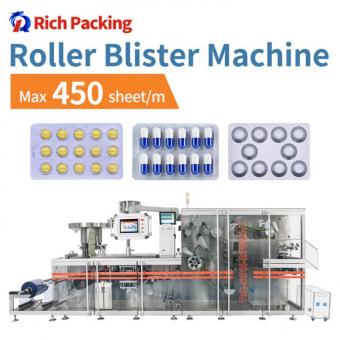
A blister packaging machine forms or supplies cavities, fills them with tablets or capsules, and seals them with lidding material. If the wrong preprinted foil roll is loaded, every sealed blister can display the wrong product name or strength even when the sealing process is technically sound.
Before startup, verify foil identity; then check registration and lot/expiry data on the first accepted blisters and at defined intervals. Product-presence inspection detects empty cavities; it does not by itself verify that the correct foil artwork was used. A downstream cartoner must still match product to carton.
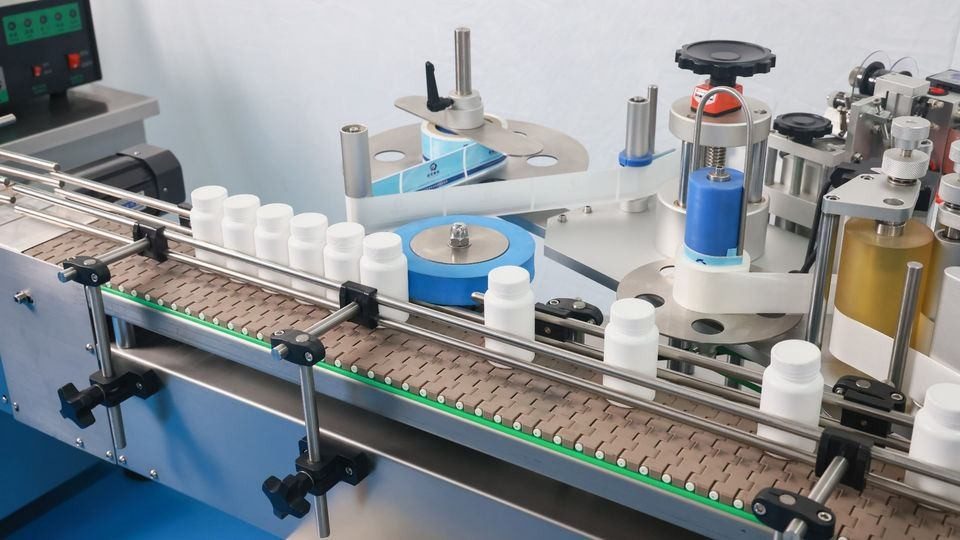
On a tablet or capsule counting and bottling line, the sequence might be counting, filling, capping, induction sealing, label application, and coding. Match bottle size, label roll, and coding job to the order.
A round bottle labeling machine can apply a wraparound or partial-wrap label, but accurate placement does not establish product identity. Bottle/SKU checks, a label reader, or a downstream OCR/OCV system may be appropriate depending on the product and installed equipment. Check how curves, seams, and reflections affect readability.
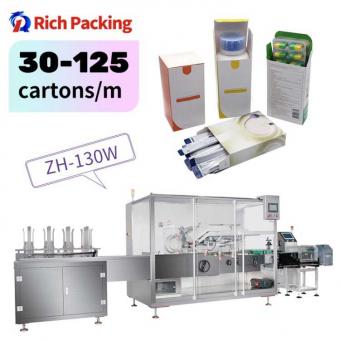
A pharmaceutical cartoning machine may insert blisters or bottles, add a leaflet, and close the carton. Correct components can still belong to different orders. The cartoner therefore benefits from clearly identified product and carton materials, reliable leaflet checks, lot/expiry verification, and confirmed rejection of mismatched packs.
|
Packaging point |
Example failure |
Control that addresses it |
|---|---|---|
|
Blister foil change |
20 mg foil loaded for a 10 mg batch |
Confirm foil artwork and strength before sealing |
|
Bottle labeling |
Label from another SKU applied to filled bottles |
Match bottle/product and label identities |
|
Leaflet feeding |
Correct number of leaflets, wrong market language |
Verify leaflet identity, not only presence |
|
Serialized carton |
Data Matrix prints but cannot be read reliably |
Check encoded data, print quality, and rejection |
These are engineering controls, not universally mandated machine features.
GMP the approved artwork into a controlled production process. In the US, 21 CFR 211.122 and 211.125 address packaging and labeling materials and their issuance; 211.130 and 211.134 address packaging-line controls and finished-pack checks. EU GMP Part I, Chapter 5 similarly covers printed materials, line clearance, overprinting, and in-process inspection.
Return to the 10 mg/20 mg example. The 20 mg job finishes and the team prepares the machine for 10 mg production. One carton remains in the magazine; the printer still stores the previous lot; a spare foil roll sits beside the line. Any one can produce an incorrectly labeled pack.
A proper line clearance removes previous products, labels, cartons, foil, inserts, code samples, and unsuitable records from the work area. The team then issues and checks the approved 10 mg components, resets the printer job, verifies the new line recipe, and documents the clearance. This prevents mix-ups before they reach final inspection.
Follow one packaging order from preparation to release:
Label reconciliation compares labels issued, used, and returned or otherwise accounted for to reveal unexplained losses or mix-ups. 21 CFR 211.125 provides a specific reconciliation waiver for certain cut or roll labeling when its required 100% examination conditions are met; it does not remove the other label-control duties.
A vision system is useful when the defect can be reliably detected—for example, a missing label, mismatched product code, or failed Data Matrix. It cannot approve artwork, clear old materials, or replace quality review. GMP does not require one universal camera arrangement.
Equipment selection starts with the packaging risks. A pharmaceutical labeling machine places a label on the container; a coding system adds variable information; an inspection system checks defined characteristics; and a cartoning machine brings the final components together. The broad term “pharma labeling machine” hides those differences.
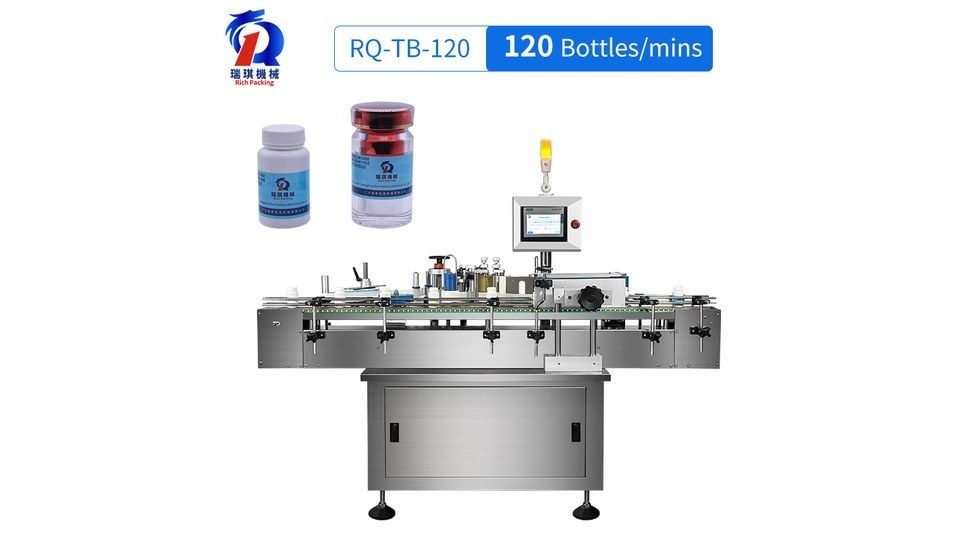
A batch coding machine or pharmaceutical label printing machine may mark preprinted labels, paperboard cartons, films, or foil. Choose among:
TIJ may suit a carton while TTO suits compatible film. No method is inherently “more GMP compliant”; test the actual substrate, speed, and print quality.
A vision inspection system can check label presence, artwork identity, OCR/OCV of batch text, or barcode/Data Matrix content. A basic barcode reader tells you whether it can decode a symbol; a barcode verification system can assess the relevant printed-code quality against a specified standard. Both depend on correct inspection recipes.
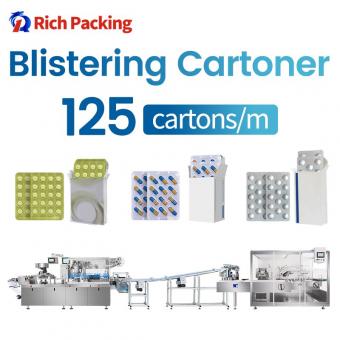
An alarm without confirmed rejection can leave a bad carton in accepted output. In an integrated blister cartoning line or pharmaceutical bottle packaging line, define the inspection location, reject tracking, failed-pack segregation, and records before approving the configuration.
A clear user requirement specification (URS) should state products, markets, required checks, changeovers, and quality records. Rich Packing can review possible labeling, coding, blister packaging, and automatic cartoning machine configurations against those requirements. The pharmaceutical manufacturer remains responsible for approved labeling and compliance.
Follow each pack from approved artwork to acceptance or rejection. Maintain the link between its identity, printed data, and components so errors are caught before release.
They are market- and product-specific rules about what medicine labeling must say, where it appears, and how it is presented and controlled. The requirements may cover bottles, blisters, cartons, leaflets, and prescribing information.
Common particulars include drug name, strength, dosage form, pack contents, warnings, batch number, and expiry date. The exact required items depend on the medicine, market, and packaging level; there is no universal field list.
Relevant US rules include 21 CFR Part 201 for drug labeling and Part 211 for packaging and labeling controls. Prescription drug information and OTC Drug Facts have different formats and requirements.
Most US OTC products use a standardized Drug Facts panel under 21 CFR 201.66. Prescription medicines follow a separate prescribing-information framework and product-specific container and carton requirements.
Directive 2001/83/EC establishes particulars for outer and immediate packaging, plus leaflet, presentation, and language requirements. Article 55 provides limited particulars for qualifying blister packs and certain small immediate containers.
For an EU blister enclosed in an outer package, Article 55(2) sets minimum particulars, including medicine name, marketing authorization holder, expiry date, and batch number. Other pack configurations need their own assessment.
No. EU unique-identifier requirements and US DSCSA identifiers have defined product scopes and exceptions. They are distinct from the FDA's Part 201 barcode rule.
Typical causes include leftover materials after changeover, incorrect artwork revisions, wrong leaflet languages, misentered lot or expiry data, and rejected packs returning to accepted output. Effective controls target each failure point.
There is no universal rule requiring a camera on every pharmaceutical packaging line. GMP requires appropriate inspection and mix-up prevention; automated vision is one possible means of control.
No machine alone ensures compliance. Labelers, coders, readers, and cartoners support the process, but accurate approved content, qualification, trained operators, documented procedures, and quality review remain essential.
1. US eCFR — 21 CFR Part 201: Drug Labeling and 21 CFR Part 211: GMP.
2. EUR-Lex — Directive 2001/83/EC.
3. EUR-Lex — Commission Delegated Regulation (EU) 2016/161.
4. EMA — Human Product Information (QRD) Templates.
5. European Commission — EudraLex Volume 4 GMP Guidelines.

29+ years in pharmaceutical machinery, covering capsule filling, tablet pressing, blister packaging, tablet and capsule counting, cartoning, GMP production, and overseas machine service.

Электронное письмо : manager@richpacking.cn
Building D, No. 226, Beishan Qiaotou Street, Haizhu District, Guangzhou City, Guangdong Province, China


 Поддерживается сеть IPv6