






 Дом
Дом Продукты


Введение
Саше — это небольшая герметичная гибкая упаковка, предназначенная для хранения отмеренного количества продукта. Распространенные примеры включают пакетики с сахаром, растворимым кофе, приправами, пробники шампуня, соусы и порошкообразные добавки.
Упаковка в саше подходит для порошков, гранул, жидкостей, гелей, кремов и других текучих продуктов при условии соответствия системы наполнения и упаковочного материала самому продукту. Это делает данный формат полезным в пищевой, нутрицевтической, фармацевтической, косметической, парфюмерно-косметической отраслях и в производстве товаров для дома.
За небольшой упаковкой стоит полноценный упаковочный процесс: поведение продукта влияет на метод наполнения, требования к защите определяют структуру пленки, а дизайн саше определяет способ формирования и герметизации упаковки.
В этом руководстве объясняется, что такое саше, каковы основные типы упаковки в саше, что они могут содержать, какие материалы используются, а также как коммерческие саше формируются, наполняются, запечатываются и нарезаются.
1. Что такое саше?
Саше — это небольшая гибкая упаковка, которая содержит отмеренное или ограниченное количество продукта внутри герметичного упаковочного материала. Обычно используется для удобства транспортировки, контроля порций, пробников или одноразового использования.
Термин «саше» описывает готовую упаковку, а не метод изготовления. Распространенные конструкции включают саше с трехсторонним швом, четырехсторонним швом и задним швом, при этом готовая форма может быть прямоугольной или фигурной.
Как выглядит саше?
Большинство саше изготавливаются из гибкого упаковочного материала, поставляемого в виде рулонной пленки, и содержат три основных элемента:
- Корпус упаковки, который окружает и удерживает продукт.
- Герметичные зоны, которые закрывают упаковку и помогают защитить содержимое.
- Элемент для открывания, такой как надрез или край для легкого открывания, если это предусмотрено дизайном упаковки.
Упаковочный материал может быть простой пленкой или многослойным ламинатом, сочетающим в себе несколько функций.
Различные слои могут обеспечивать возможность печати, механическую прочность, защиту от влаги или кислорода, защиту от света и способность к термосвариванию.
Правильная структура зависит от продукта. Сухие приправы, чувствительный к влаге порошок добавок и жидкий соус предъявляют разные требования к барьерной защите, качеству сварного шва и прочности упаковки.
Саше против пакета-дойпак: в чем разница?
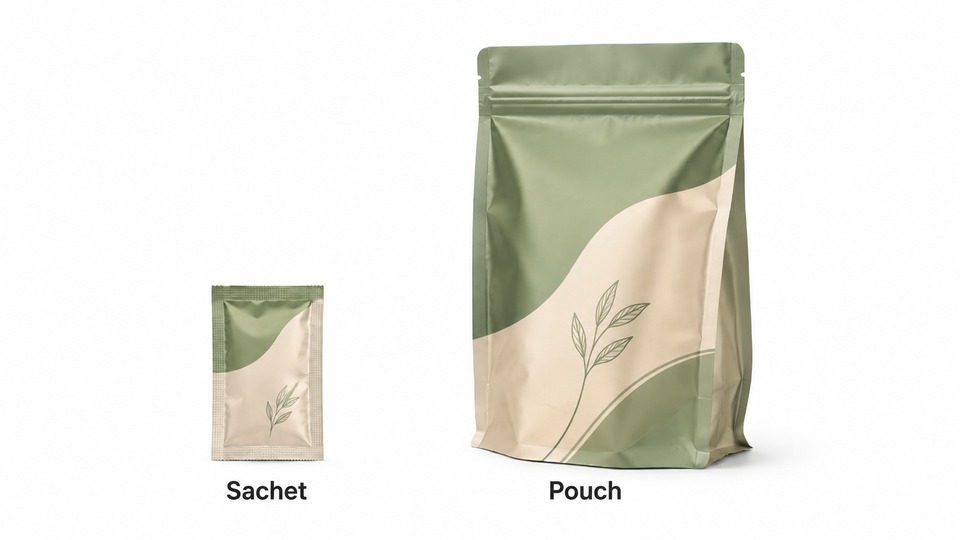
Саше — это тип гибкой упаковки, в то время как «пакет» (pouch) — это более широкий упаковочный термин.
В обычном упаковочном применении саше чаще всего относится к небольшой упаковке, содержащей отмеренное или ограниченное количество, тогда как пакеты охватывают более широкий спектр размеров и форматов, включая стоячие пакеты, пакеты с зип-замком и пакеты с дозатором.
Не существует универсального размера, при котором саше становится пакетом, поэтому термины могут пересекаться в разных отраслях.
Многие небольшие саше формируются из рулонной пленки на машине для упаковки в саше, в то время как более крупные или сложные пакеты часто поставляются в готовом виде и затем открываются, наполняются и запечатываются индивидуально.
2. Каковы основные типы упаковки в саше?
Самый понятный способ классификации типов упаковки в саше — сначала по структуре шва, а затем отдельно по форме и специальным характеристикам.
Саше с трехсторонним швом
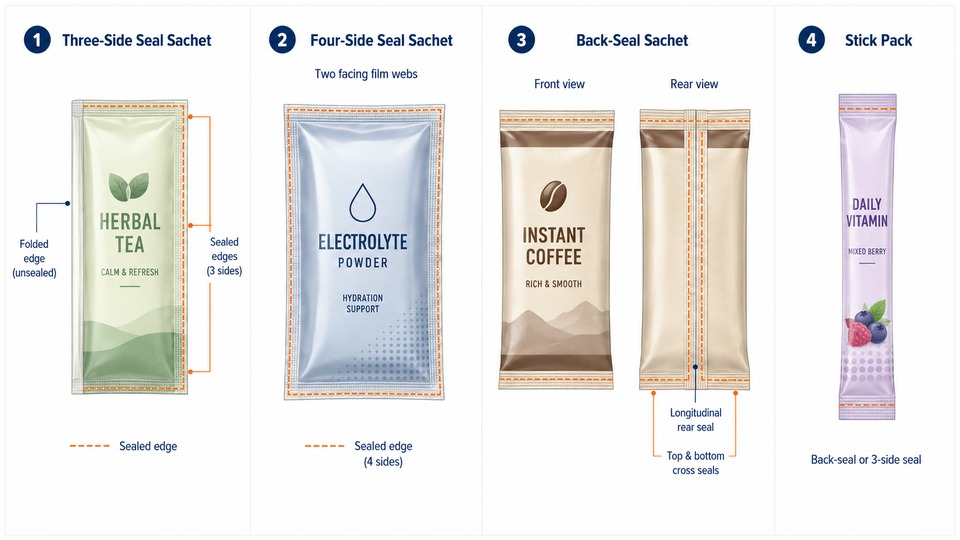
Саше с трехсторонним швом обычно формируется из одного полотна пленки, сложенного для создания одного закрытого края; остальные три края свариваются термически.
Результатом является плоская, компактная упаковка, широко используемая для порошков, гранул, жидкостей, пробников и других небольших порций.
Саше с четырехсторонним швом
Саше с четырехсторонним швом обычно формируется из двух полотен пленки, сложенных лицевыми сторонами друг к другу и сваренных по всем четырем краям. Два полотна могут поступать с отдельных рулонов или из одного рулона, разрезанного на два полотна.
Обычно используется для порошков, гранул, жидкостей, кремов и гелей.
Саше с задним швом
Саше с задним швом формируется путем оборачивания пленки вокруг формующего узла, создания продольного заднего шва и добавления верхнего и нижнего поперечных швов.
Стик-пакеты: узкий формат разовой дозы
Стик-пакет — это узкая, удлиненная гибкая упаковка. В зависимости от дизайна упаковки, она может иметь структуру с задним или трехсторонним швом. Стик-пакеты широко используются для порошковых напитков, добавок, сахара, гранул и некоторых жидкостей.
| Формат / Структура шва | Типичная форма | Распространенные продукты | Основная характеристика |
|---|---|---|---|
|
Трехсторонняя запайка |
Плоская, квадратная или прямоугольная |
Порошок, гранулы, жидкость |
Один сгиб и три запаянных края |
|
Четырехсторонняя запайка |
Плоская, квадратная или прямоугольная |
Порошок, жидкость, крем, гель |
Два полотна пленки, запаянные со всех четырех сторон |
|
Запайка сзади (центральный шов) |
Прямоугольная или в форме подушечки |
Порошок, гранулы, жидкость |
Задний продольный шов плюс верхний и нижний поперечные швы |
|
Стик-пакет (формат) |
Узкий и вытянутый |
Порошок, гранулы, жидкость |
Узкий вытянутый формат; архитектура шва варьируется в зависимости от конструкции машины для стик-пакетов |
Формы саше и специальные дизайны
Трехсторонние, четырехсторонние и саше с задним швом также могут иметь различные контуры или дополнительные удобные функции.
Распространенные примеры включают:
- Прямоугольные саше — самая привычная и простая форма.
- Фигурные саше с изогнутыми, закругленными или индивидуальными контурами для презентации продукта или специфического использования.
- Саше с насечкой для легкого открывания вручную.
- Саше с европодвесом, позволяющие размещать упаковки на торговых крючках там, где это необходимо.
3. Что можно упаковывать в саше и из чего они сделаны?
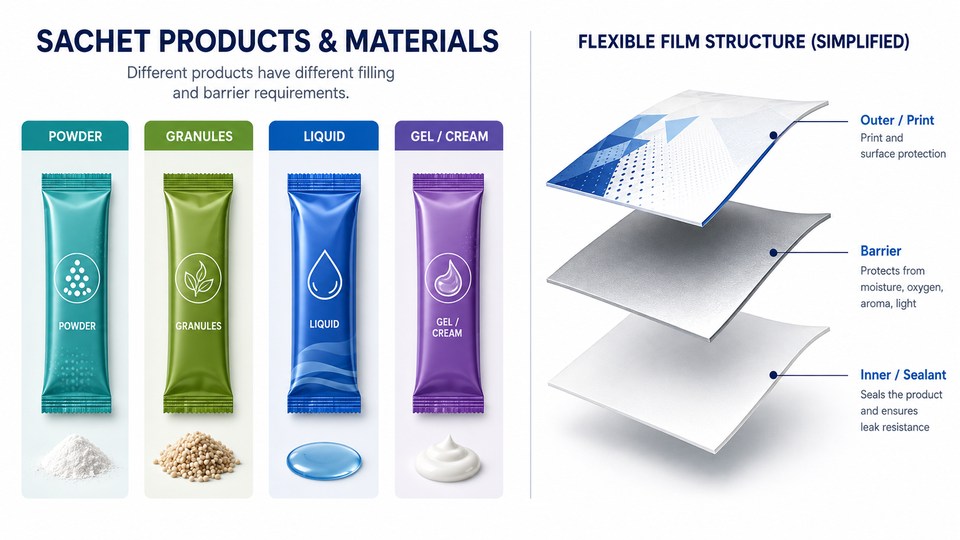
Саше могут содержать широкий спектр продуктов, включая порошки, гранулы, жидкости, гели, кремы и пасты. Упаковочный материал подбирается в соответствии с характеристиками продукта, а также требованиями к защите, герметичности и удобству обращения с готовым саше.
Порошки и гранулы
Мелкие порошки могут удерживать воздух, образовывать своды или прилипать, в то время как сыпучие гранулы, такие как сахар и соль, ведут себя иначе.
Для порошков можно использовать шнековое дозирование, а для сыпучих гранул — подходящие объемные системы.
Загрязнение зоны запайки — это не просто проблема нехватки места. Мелкий порошок может оставаться в воздухе, прилипать к пленке из-за статического электричества или продолжать сыпаться из дозирующей трубки после завершения дозирования. Положение сопла, время отсечки, пылеудаление, контроль статики и время осаждения продукта должны проверяться в комплексе для поддержания чистоты зоны запайки.
Жидкости, гели, кремы и пасты
Метод наполнения сильно зависит от вязкости: для жидкого продукта требуются иные характеристики насоса и сопла, чем для густого соуса или крема.
Продукты с более высокой вязкостью также требуют контролируемого наполнения и отсечки, чтобы предотвратить попадание материала в зону шва.
Поэтому машина для наполнения саше должна выбираться в соответствии как с размером упаковки, так и с характеристиками продукта.
Упаковочные материалы для саше
Для саше могут использоваться пластиковые пленки, ламинаты с содержанием алюминия, структуры на основе бумаги и другие многослойные комбинации.
Многослойные материалы сочетают в себе несколько функций: внешний слой может обеспечивать печать и прочность, барьерный слой — снижать воздействие влаги, кислорода или света, а внутренний слой — обеспечивать термосвариваемость.
Саше из алюминиевой фольги можно выбрать, когда требуется более высокая защита от света, влаги или газов.
Другие продукты могут использовать прозрачные, металлизированные или бумажные структуры в зависимости от потребностей в защите, внешнем виде, стоимости, свариваемости и хранении.
4. Как производятся саше?
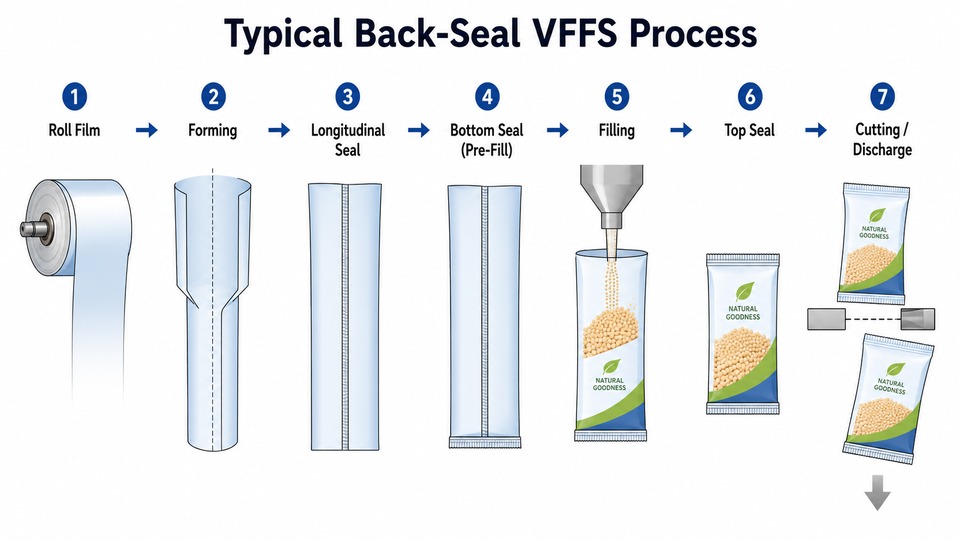
Коммерческие саше обычно производятся на фасовочно-упаковочном оборудовании типа «формирование-заполнение-запайка». Пленке придается необходимая форма, посредством первичных швов формируется карман или рукав с запаянным дном, выполняется дозирование продукта, после чего упаковка окончательно герметизируется и отрезается.
Точная схема подачи полотна и порядок запайки зависят от формата саше и типа продукта.
Шаг 1: Размотка и подача пленки
Производство начинается с гибкого упаковочного материала, поставляемого в рулонах.
Машина для упаковки в небольшие саше разматывает и направляет пленку в зону формирования, регулируя ее перемещение и натяжение.
При использовании пленки с печатью фотометки помогают точной выверке позиций печати, запайки и отреза.
Шаг 2: Фокусировка по меткам и формирование саше
Пленка позиционируется и формуется в соответствии с требуемой конструкцией упаковки.
При формате с задним швом пленка оборачивается вокруг формообразующего узла перед нанесением продольного шва. Для трехшовных саше обычно используется одно сложенное полотно, тогда как на линиях четырехшовной запайки соединяются два полотна.
В типичном цикле вертикальной фасовочно-упаковочной машины (VFFS) с задним швом продольный шов формирует рукав, а поперечный шов создает закрытое дно перед подачей дозы продукта.
Шаг 3: Дозирование и наполнение продуктом
Как только карман или рукав с запаянным дном готов, система наполнения отмеряет и подает необходимую дозу.
Для различных продуктов требуются соответствующие методы дозирования:
- для порошков применяются шнековые дозаторы;
- для сыпучих гранул используются подходящие объемные дозаторы;
- для жидкостей подходят поршневые, перистальтические или другие дозирующие насосы;
- для кремов, гелей и паст требуются системы наполнения, предназначенные для продуктов с повышенной вязкостью.
Машина для упаковки в саше должна соответствовать как формату пакета, так и самому продукту. Для двух разных продуктов в саше одинакового размера могут потребоваться абсолютно разные системы наполнения.
Шаг 4: Закрытие и запайка саше
В стандартном цикле VFFS с задним швом нижний поперечный шов уже сформирован до наполнения. После дозирования и протяжки пленки горизонтальные губки одновременно делают верхний шов наполненного саше и нижний шов следующего. Трехшовные и четырехшовные машины используют другие траектории полотна и последовательности запайки, однако продукт в любом случае подается в секцию упаковки, которая уже закрыта снизу или сформирована в виде зафиксированного открытого кармана.
Качество термосварки зависит от температуры, давления, времени контакта, структуры пленки и чистоты свариваемых поверхностей.
Пыль от порошка, капли жидкости или паста в зоне запайки могут помешать формированию надежного шва.
Шаг 5: Отрезка и выгрузка
После нанесения финального шва полотно разрезается на готовые саше.
Машина может производить как одиночные, так и сцепленные саше; при необходимости в процесс интегрируются маркировка, просечка насечки для легкого открывания, подсчет или передача на последующие этапы.
Для типичной линии VFFS с задним швом последовательность выглядит следующим образом:
подача пленки -> фокусировка по меткам и формирование -> продольная запайка -> нижний/поперечный шов -> дозирование и наполнение -> верхний/запечатывающий шов -> отрезка -> выгрузка
Эта непрерывная последовательность позволяет современной машине для фасовки в саше автоматически производить малые упаковки в промышленных масштабах.
5. Почему используется упаковка в саше и как выбрать правильный формат?
Упаковка в саше сочетает в себе компактный размер, точную порционность, широкий выбор гибких материалов и удобство в использовании.
Она отлично подходит для разовых порций, пробников, дорожных наборов, дозированных ингредиентов и продуктов, требующих индивидуальной герметичности до момента применения.
Однако они подходят не для всех задач. Маленькие пакетики предоставляют ограничение по площади для печати, попадание продукта в зону запайки ухудшает качество шва, а некоторые многослойные структуры с высокими барьерными свойствами трудно перерабатывать стандартными методами.
Выбор подходящего саше следует начинать с самого продукта.
| Фактор | Почему это важно |
|---|---|
|
Форма продукта |
Определяет систему наполнения и дозирования |
|
Размер порции |
Влияет на размеры пакетика саше и диапазон дозирования |
|
Требования к барьерным свойствам |
Помогает определить структуру пленки |
|
Свариваемость |
Влияет на материал и условия запайки |
|
Формат пакетика саше |
Определяет конфигурацию формования и запайки |
|
Производительность |
Влияет на скорость машины и уровень автоматизации |
|
Потребность в переналадке |
Имеет значение, когда одна линия используется для нескольких продуктов или размеров |
Скорость производства не должна рассматриваться отдельно. Более быстрая машина дает мало преимуществ, если система дозирования не может стабильно подавать продукт или пленка не может обеспечить надежные швы.
Для фармацевтических, нутрицевтических, пищевых и аналогичных производственных сред легкость очистки, конструкция деталей, контактирующих с продуктом, перемещение материалов и интеграция в линию также имеют важное значение.
Заключение
Итак, что такое пакетик саше?
Саше — это небольшая герметичная гибкая упаковка для измеренного или ограниченного количества порошка, гранул, жидкости, геля, крема или другого подходящего продукта.
Готовая упаковка отражает несколько взаимосвязанных решений. Текучесть продукта, вязкость и целевая доза сначала определяют метод дозирования или наполнения. Затем целевая доза и требования к упаковке задают размеры саше и формат шва; если используется формовочная труба, эти размеры определяют подходящий формовочный комплект. Затем требования к барьерным свойствам и свариваемости определяют структуру пленки.
Последовательность выбора следующая:
характеристики продукта и целевая доза -> метод дозирования/наполнения -> размеры саше и формат шва -> формовочный комплект или труба (при наличии) -> требования к барьерным свойствам пленки и свариваемости -> конфигурация фасовочно-упаковочного автомата для саше и производственные испытания
Обладая многолетним опытом в области фармацевтического и упаковочного оборудования, компания Rich Packing предлагает решения для упаковки в саше с дозированием под конкретный продукт, сервоуправлением подачей и контролем температуры запайки. Эти возможности помогают адаптировать систему фасовки и запайки под различные продукты и форматы саше.
Часто задаваемые вопросы
1. Что такое саше?
Саше — это небольшая герметичная гибкая упаковка, используемая для хранения измеренного или ограниченного количества продукта, включая порошки, гранулы, жидкости, кремы, гели, пищевые ингредиенты, добавки и косметику.
2. В чем разница между саше и паучем?
Термин «саше» обычно относится к более мелкой гибкой упаковке для дозированного или ограниченного количества, тогда как «пауч» — более широкое понятие, охватывающее такие форматы, как стоячие пакеты (дой-пак), пакеты с застежкой-молнией и пакеты со штуцером.
3. В чем разница между саше и стик-пакетом?
Стик-пакет — это узкая, удлиненная упаковка для разовой дозы. Конструкция его шва может быть с задним швом или с трехсторонней запайкой.
4. Какие продукты можно упаковывать в саше?
В саше можно упаковывать порошки, гранулы, жидкости, гели, кремы и пасты, если система наполнения и упаковочный материал соответствуют продукту.
5. Из чего изготавливают саше?
Саше могут изготавливаться из пластиковых пленок, ламинатов на основе алюминиевой фольги, бумагосодержащих структур и других многослойных материалов, выбранных с учетом требований к герметичности, печати, прочности и барьерным свойствам.
6. Как работает машина для упаковки в саше?
Машина для упаковки в саше формует рулонную пленку, дозирует продукт, выполняет необходимые швы и отрезает готовые саше. Последовательность дозирования и запайки зависит от продукта и конструкции упаковки.
Источники
- Vertical Form/Fill/Seal 101: Key Considerations. Packaging World.
- Film Criteria for Vertical Form/Fill/Seal Applications. Packaging World.
- Системы укупорки контейнеров для упаковки лекарственных средств и биологических препаратов для человека. Управление по санитарному надзору за качеством пищевых продуктов и медикаментов США (U.S. Food and Drug Administration).
- Определение гибкой упаковки. Ассоциация гибкой упаковки (Flexible Packaging Association).


 Поддерживается сеть IPv6